SquatMetrics
2025Measures the biomechanical quality of a squat, from depth to symmetry to joint risk, and tests how much of what a mocap lab captures can be recovered from four plain RGB cameras.

1 / 8
The project
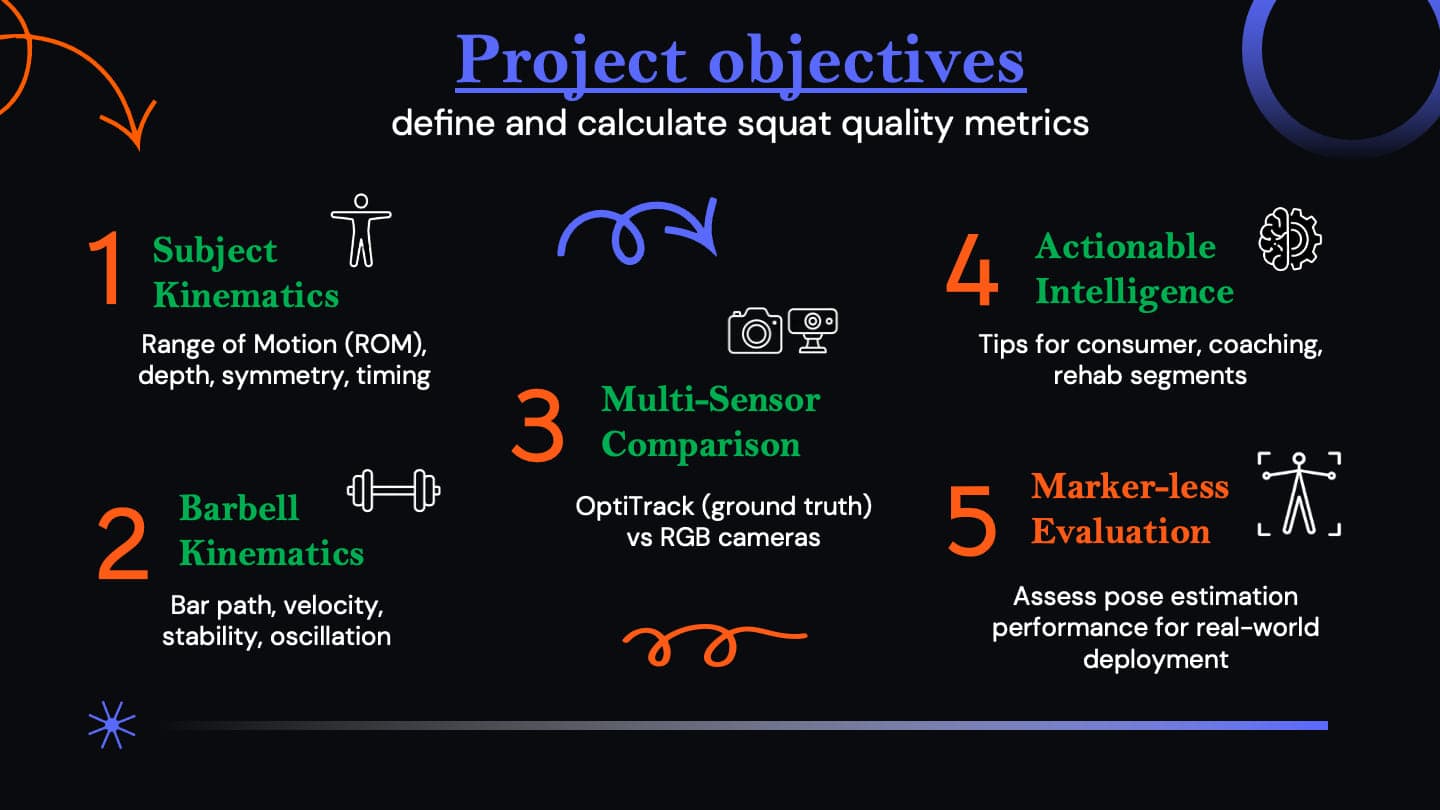
Judging a squat is usually a matter of the eye: the coach watches and says whether it looked right. SquatMetrics tries to replace that judgement with repeatable numbers, and does so along two parallel routes that are then compared against each other.
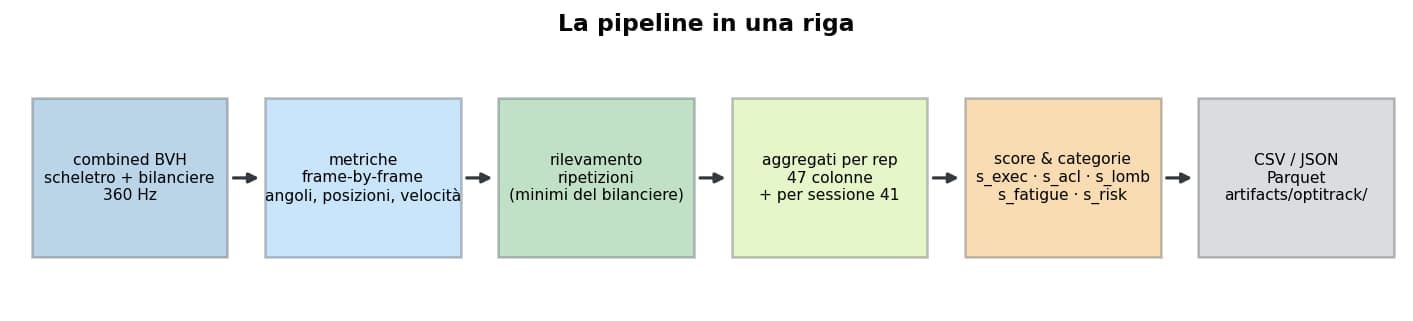
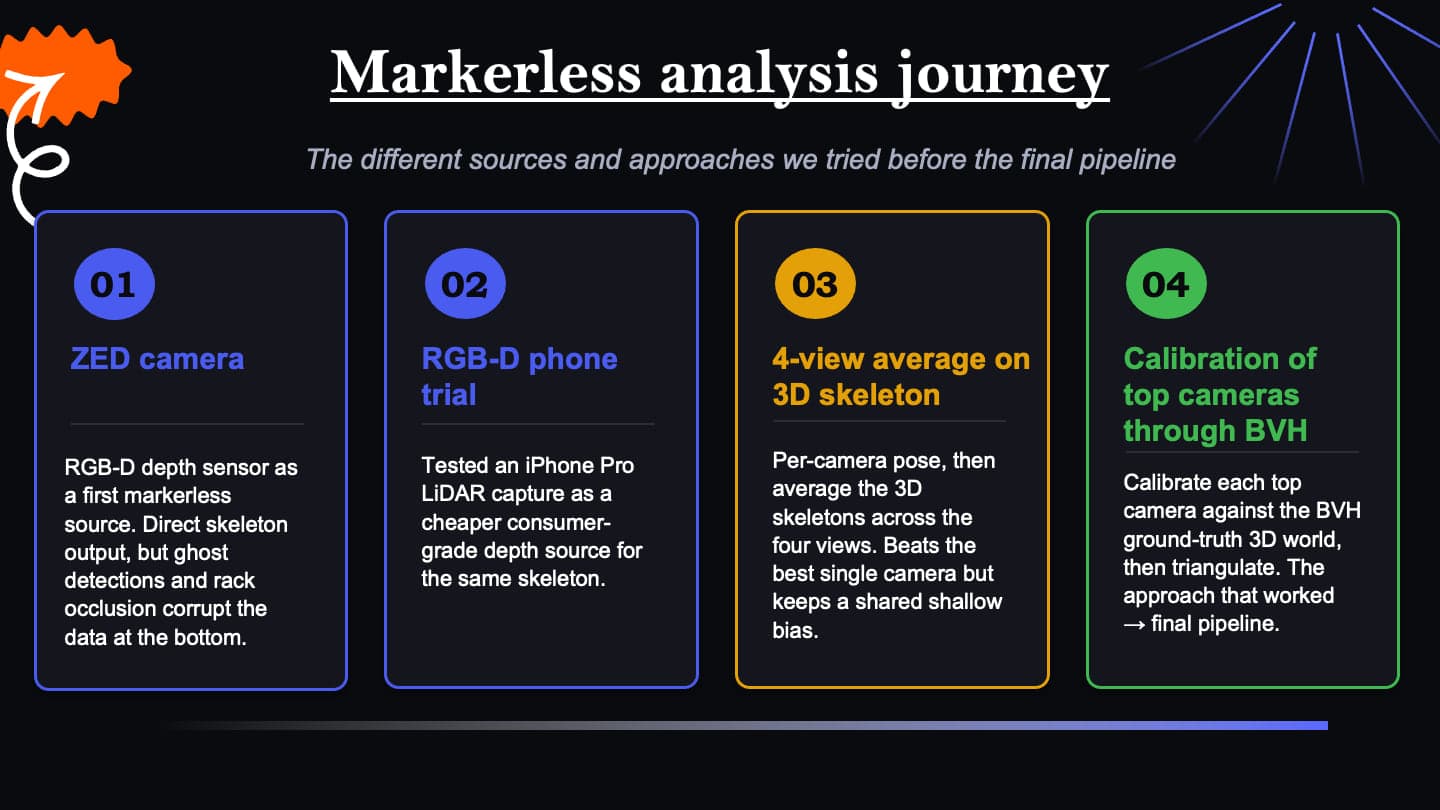
The first route is the reference: an OptiTrack mocap system with physical markers and a tracked barbell, producing the real skeleton at 360 Hz. The second reconstructs the very same session from four RGB cameras alone, with no markers and no tracked barbell: pose estimation, calibration, triangulation of points in space.
The strength of the architecture is that metrics and scores are computed by the exact same functions on both skeletons. When a value differs, the difference does not come from how it was computed, only from the quality of the 3D reconstruction. The comparison is clean.
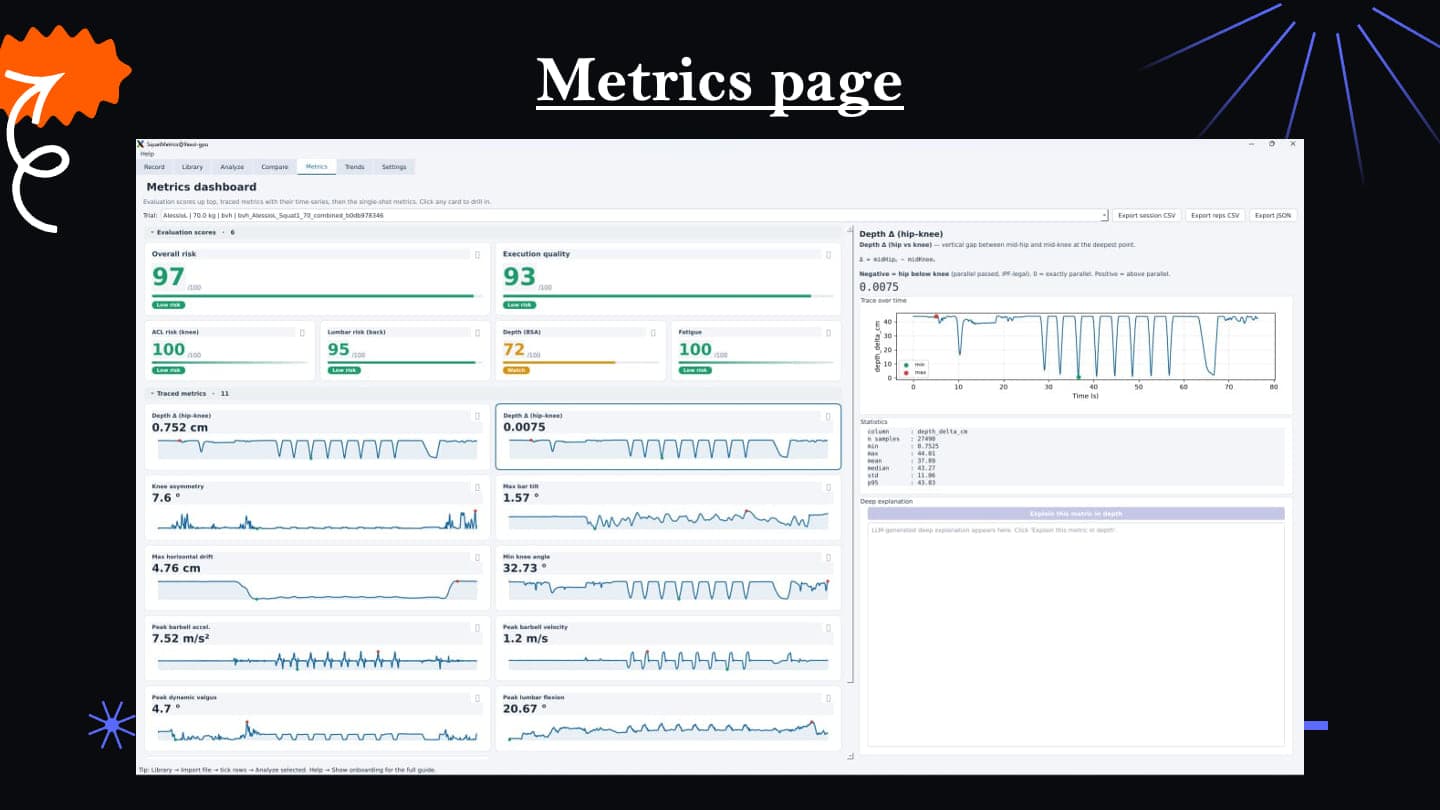
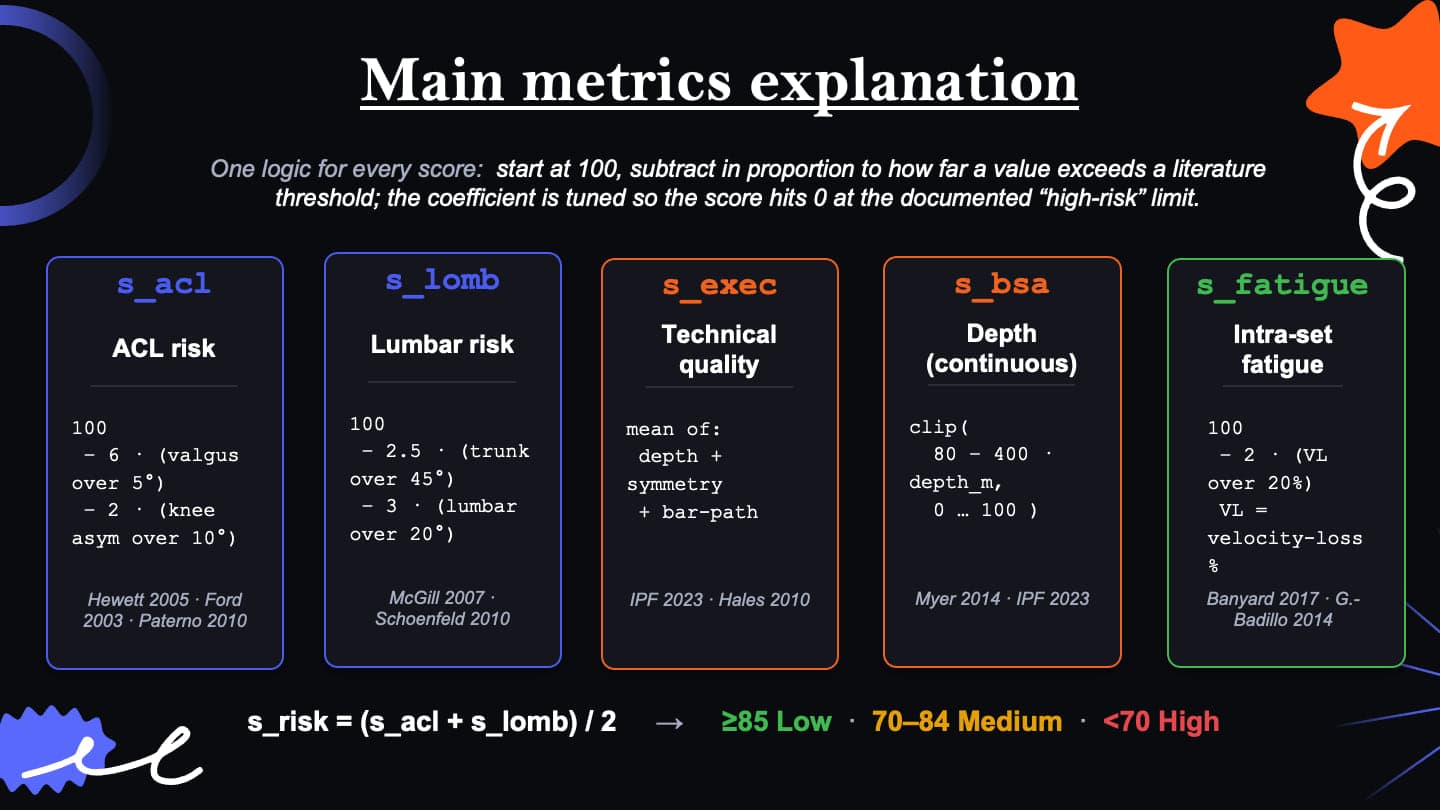
From the metrics come 0-100 scores for technical execution, ACL risk, lumbar risk and within-set fatigue, alongside bar path, velocity and sticking point.
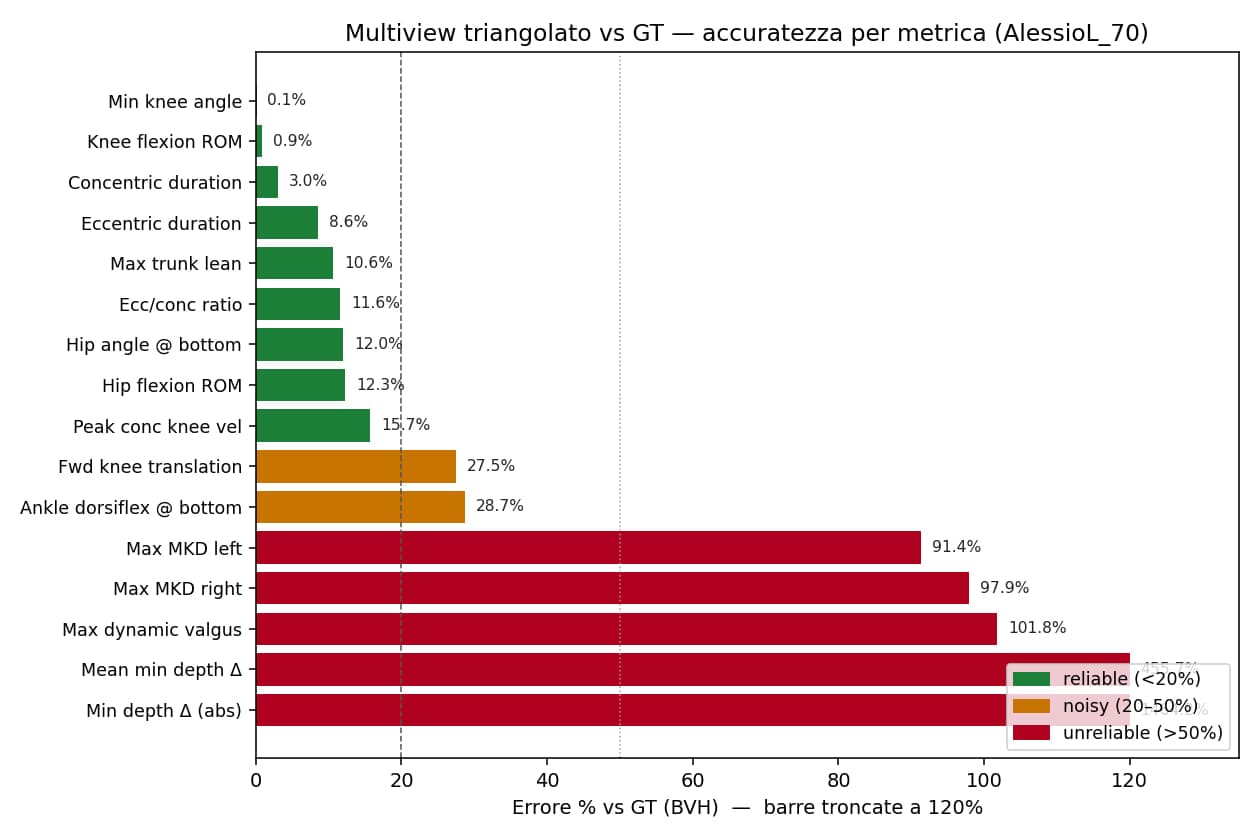
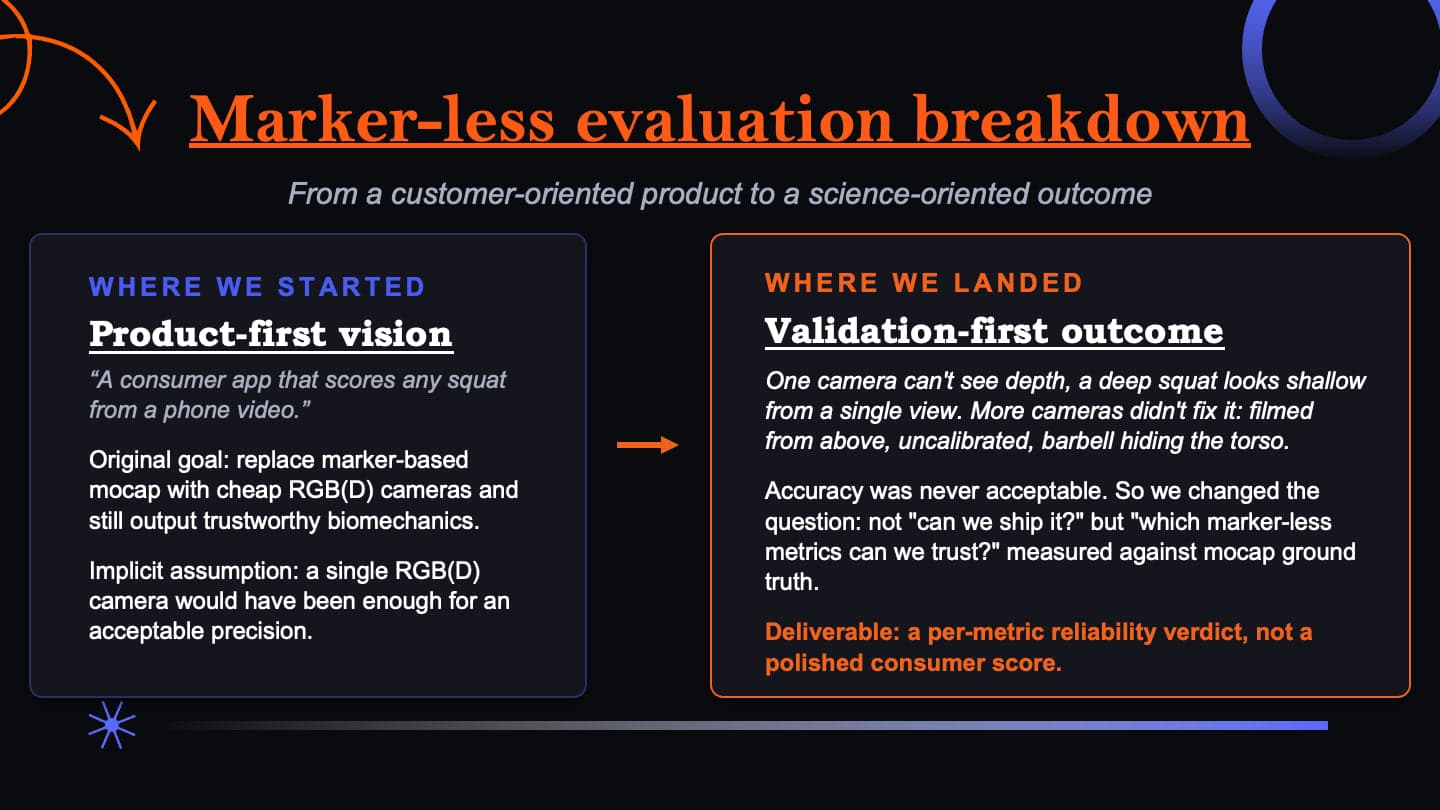
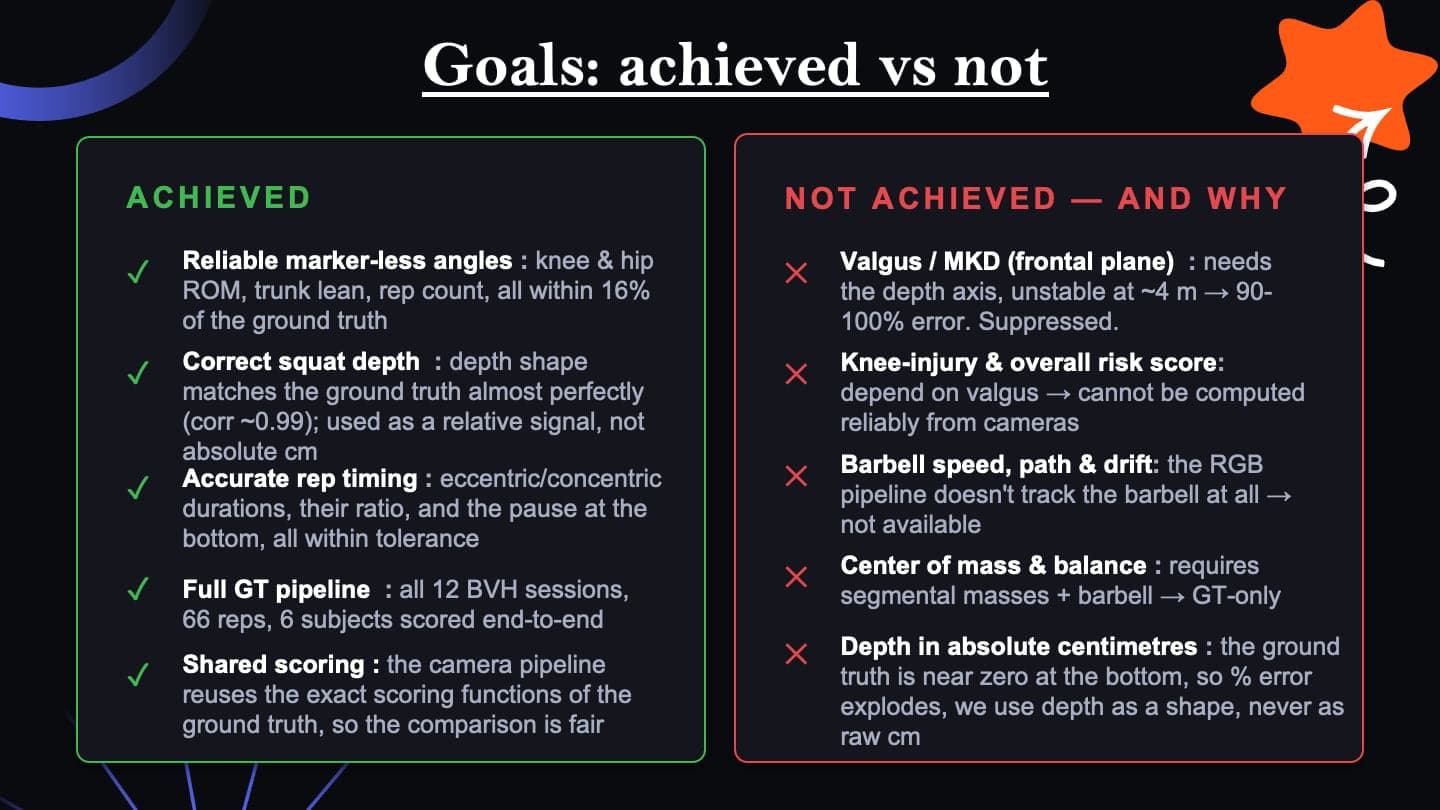
The most honest part of the project is the final verdict, because it is partly negative. Nine metrics out of sixteen land under 16% error against the reference: rep count, knee and hip angles and ranges, phase durations, trunk lean. Two are noisy. Five are unreliable beyond 50%, and they are all the ones depending on the triangulation's depth axis, unstable at four metres. Rather than hide them, we declared them not available: a wrong number about joint risk is worse than no number.
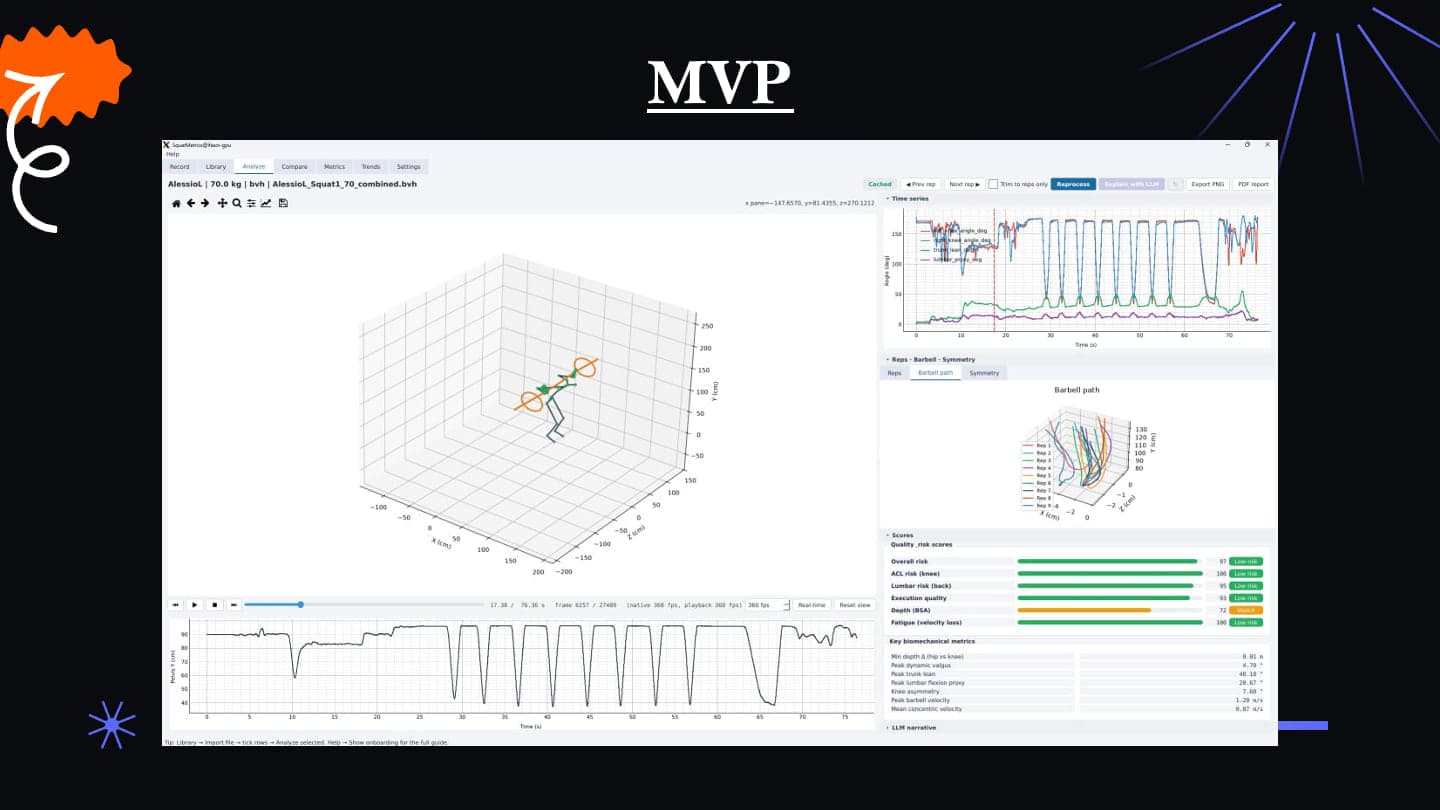
On top of the pipeline sits a PyQt6 desktop application that holds it together for the demo: session library, comparison between the two skeletons with animated playback and joints coloured by confidence, metric-over-time charts and a table of verdicts.